

About Día de los Muertos
Día de los Muertos, or Day of the Dead, is not a time of mourning, but a vibrant, colorful celebration of life. Originating in Mexico, this tradition welcomes the spirits of departed loved ones back for a joyful reunion of remembrance, food, and creative expression.
History & Origins
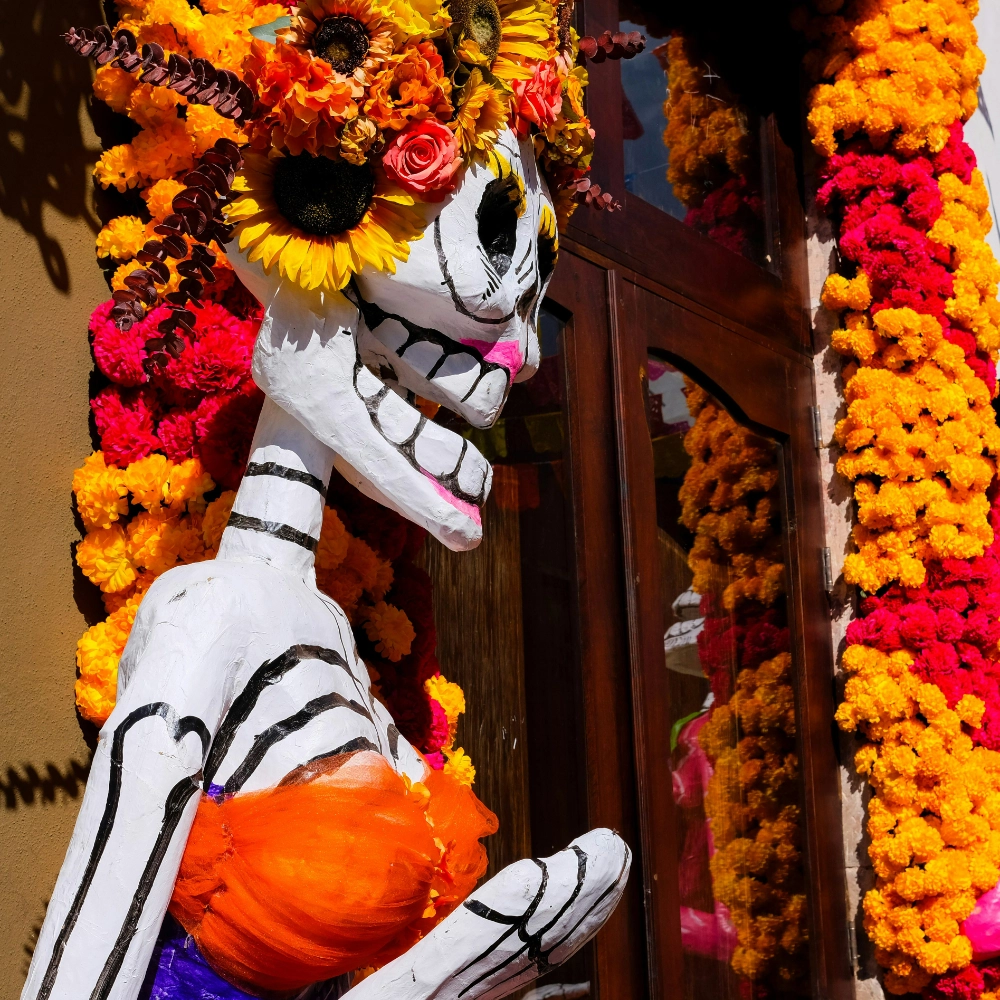
A synthesis of ancient indigenous belief and Spanish colonial custom, surviving through generations as a testament to the enduring power of family.
Indigenous Roots & Aztec Heritage
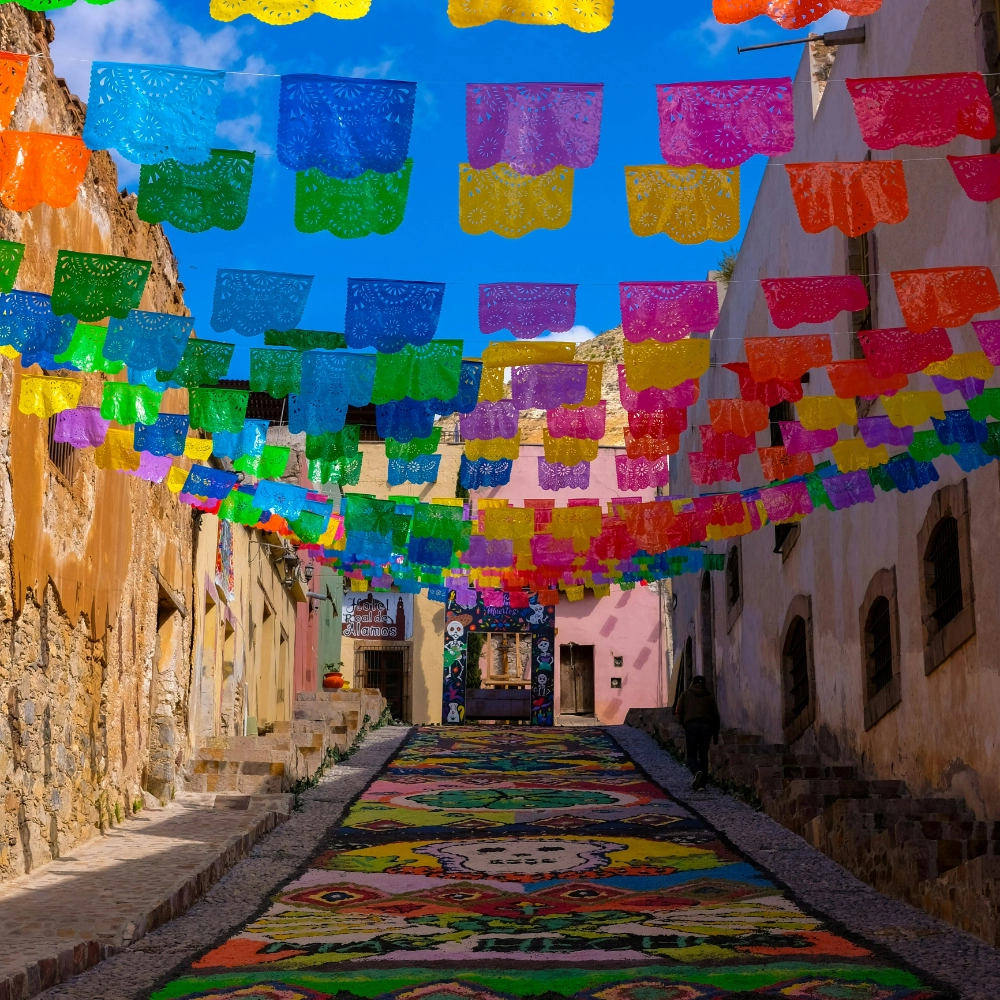
For the Aztec, Purépecha and other Nahua peoples, death was not an end but a natural phase of life's long cycle. The dead remained active members of the community, kept alive in memory and spirit.
Following Spanish colonization these beliefs blended with Catholic observances of All Saints' Day and All Souls' Day, creating the cultural synthesis celebrated today.
Traditions & Sacred Symbols
Each element placed on the altar serves a distinct purpose — guiding the spirits back with light, scent, texture and taste.
Ofrendas (altars)
The heart of the celebration
In homes across Mexico the ofrenda is more than decoration, it is a threshold between two worlds. Departed loved ones are invited back as guests, and offered water for thirst, candles for light, favorite foods as expressions of love, and portraits representing who they were on this earth.
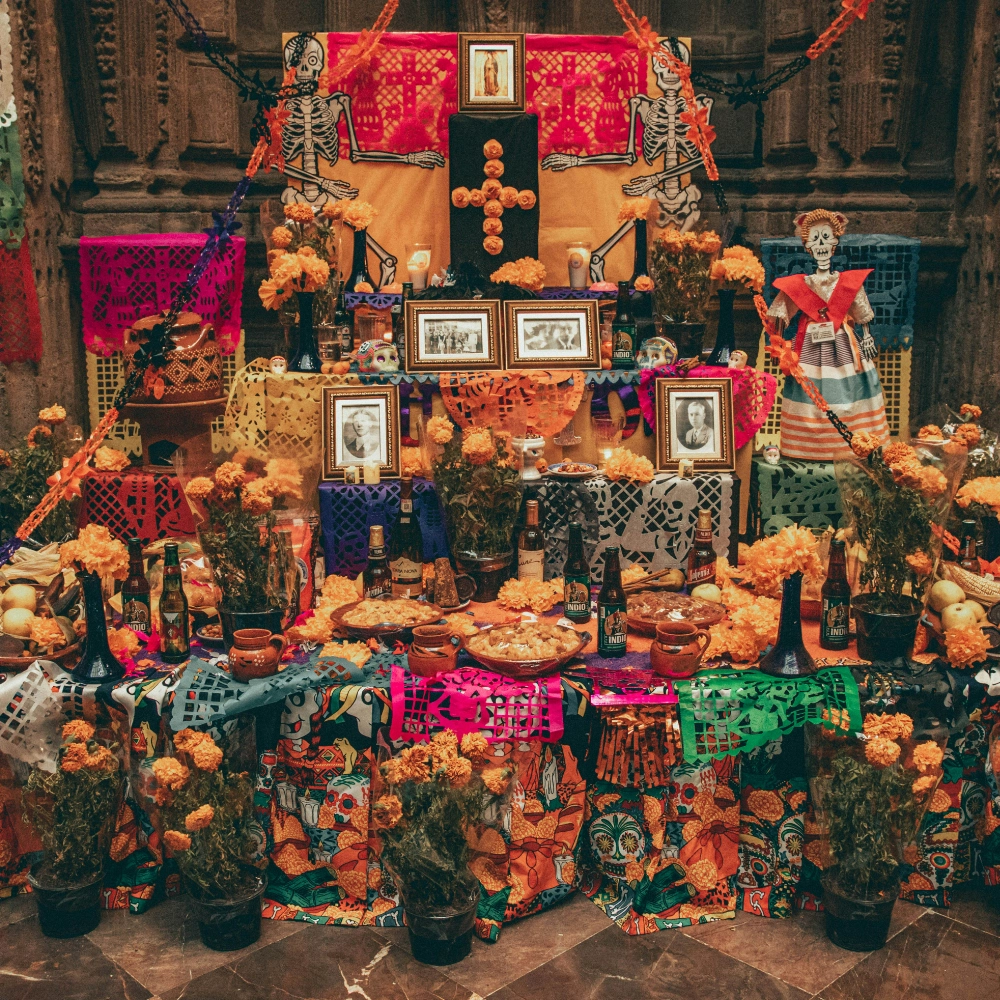
A family altar in a home, with candles, marigolds and photographs.
"The ofrenda is not a decoration — it is a threshold. It is the first thing the spirit sees when it returns."
Cempasúchil (marigolds)
The flower of twenty petals
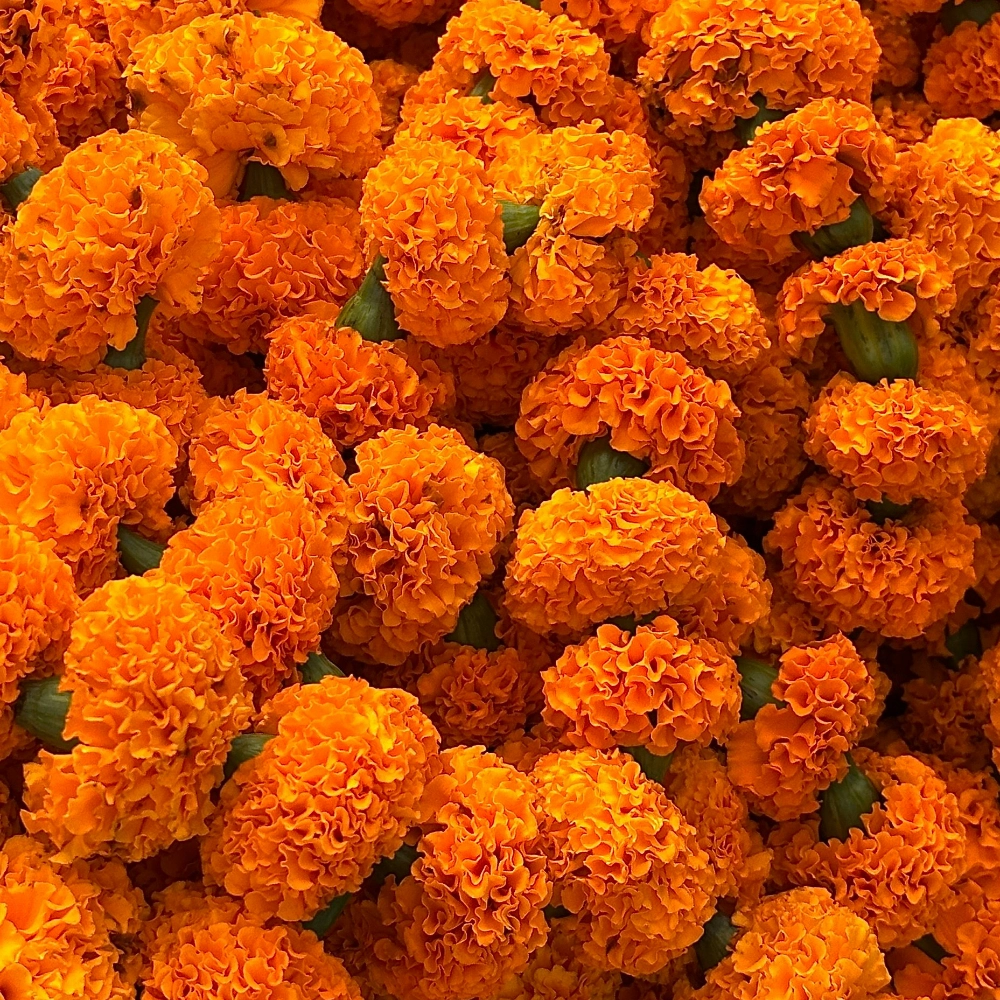
The cempasúchil is the most recognizable symbol of the season. Its vibrant color and strong fragrance form a sensory path that guides spirits from their resting place back to the family home.
The flower's bright hue is not accidental. In pre-Hispanic tradition yellow was associated with the sun and the cycle of life.
In markets bunches are sold by the dozen; at home they are arranged with precision — a few stems on the altar, a few petals on the floor.
Calaveras (sugar skulls)
The sweetness of life
Traditional sugar art molded into skulls, brightly decorated with colorful icing and foil, representing the sweetness of life and the joyful spirit of the departed.
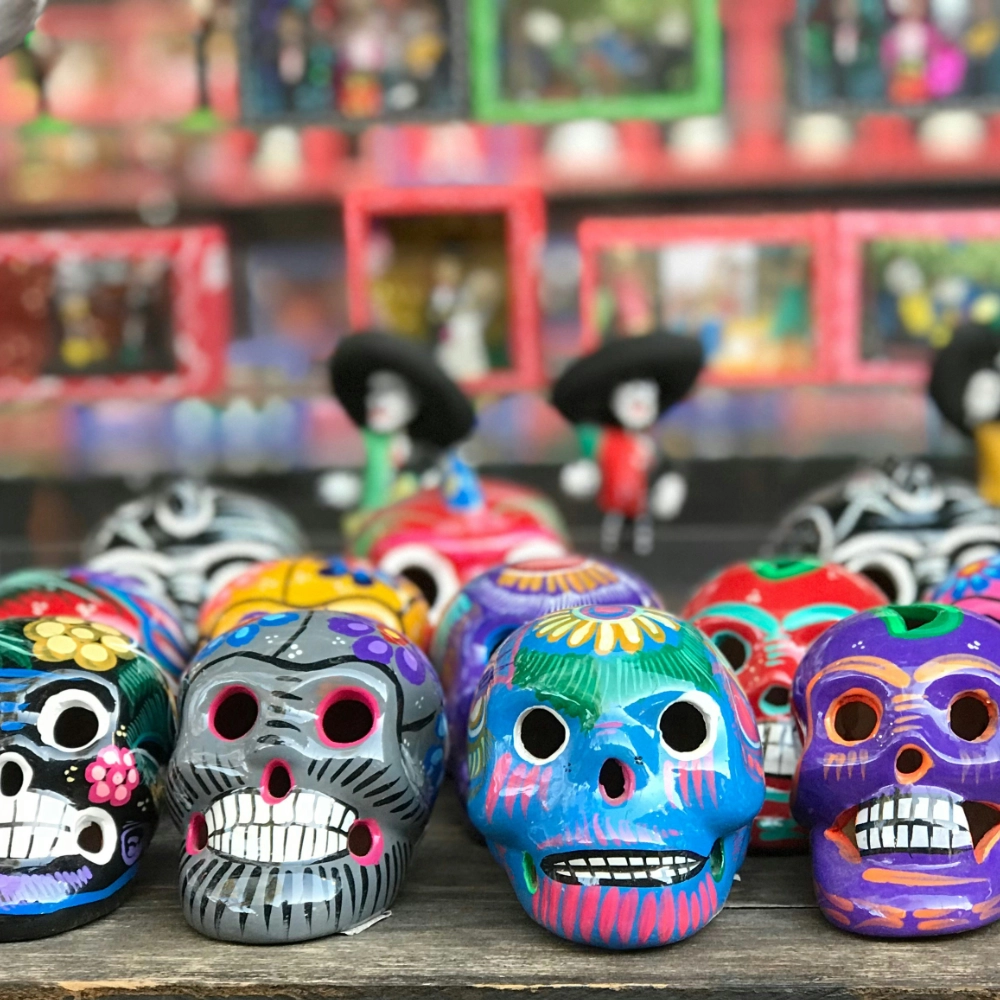
The calavera is a masterclass in contrast — a symbol of death rendered in sugar and color. The skulls are not frightening; they are familiar, personalized and joyful reminders of our dearly departed.
In the markets artisans spend hours piping intricate designs onto each skull. Names are written in icing, making each piece a personal tribute.
Pan de muerto
A sweet offering
A sweet, round, dusted-sugar bread decorated with bone-shaped designs. It represents the soil, the deceased, and the generous offering of nourishment to returning souls.

pan de muerto on an altar, surrounded by marigolds and candles.
The bread is a staple of the season, baked in large batches and shared among families. When you break the bread you are sharing a meal with those who are no longer at the table.
Papel picado
A delicate welcome
Chiseled tissue-paper banners hanging above the altar. Their delicate, airy movement signals the gentle arrival of the spirits on the autumn breeze.
Papel picado is cut by hand, strip by strip, into intricate patterns that filter the light. In a light breeze the banners rustle and sway, like a soft, wordless greeting.
The banners are often strung above doorways, across streets and above altars, turning a static display into a living celebration.
La Catrina & face painting
A symbol of equality
Originally created as a satirical etching by José Guadalupe Posada, the elegant skull La Catrina has become a beloved icon, reminding us that in death we are all equal.
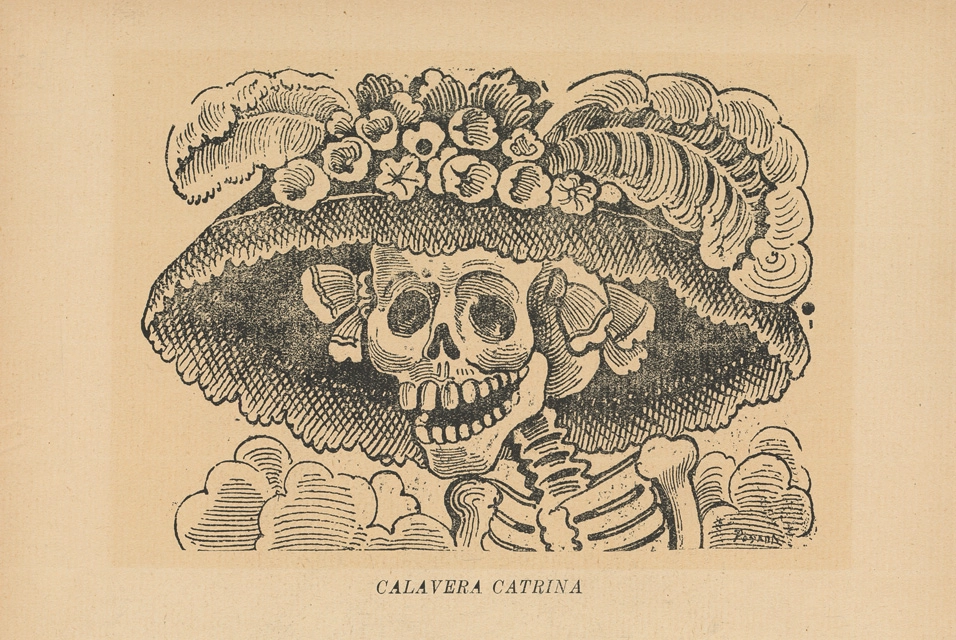
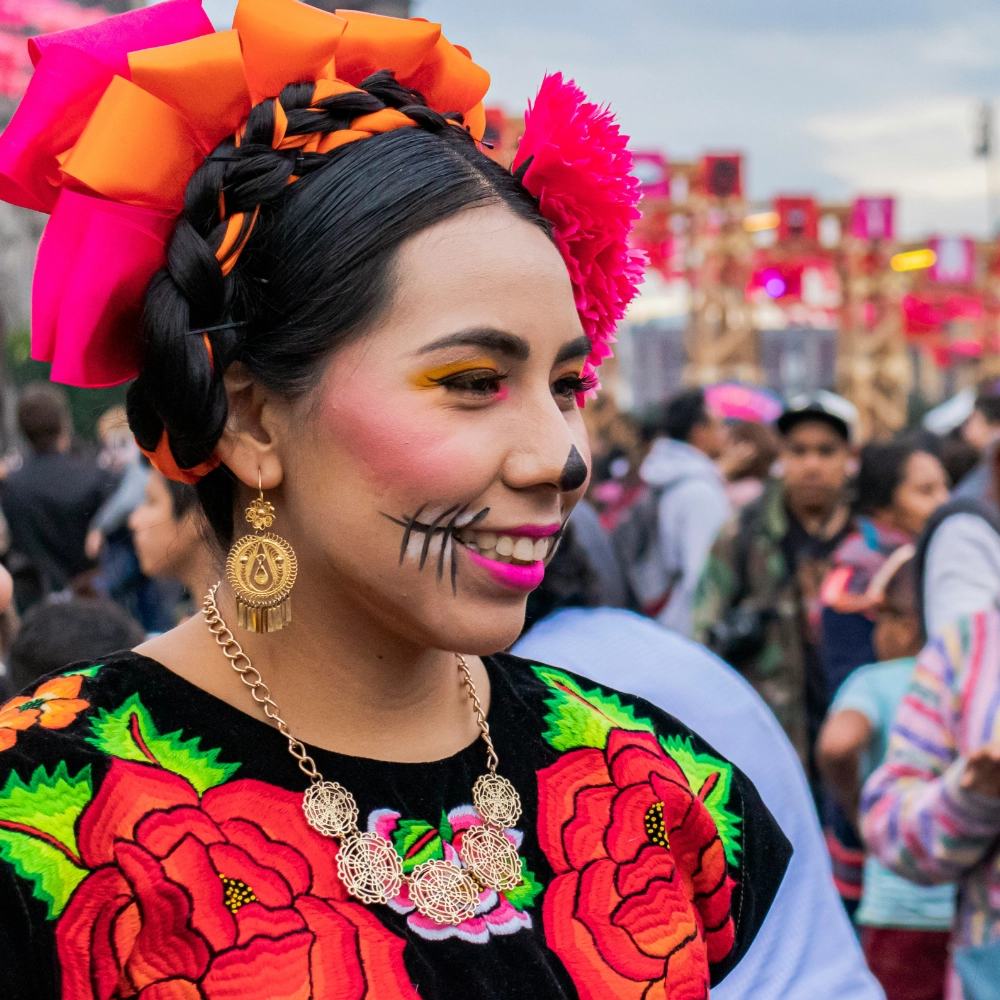
Today La Catrina is celebrated through face painting and costume. Painting a skull onto your own face acknowledges mortality but also claims it as a shared human experience.
"Death is not the end of a life, but a part of it. And in that part there is beauty, there is memory, and there is celebration."
How the World Celebrates
From quiet candlelit vigils in ancestral cemeteries to sweeping, music-filled city parades, Día de los Muertos is expressed in endless regional variations.
Cemetery Vigils
In some communities families spend the night of November 1st in the local cemetery. Graves are cleaned, blanketed in marigold petals and lit by hundreds of candles as families share food and recall memories until dawn.
Home & Hearth
For many families the celebration is intimate and hands-on. Gathering in kitchens to bake pan de muerto and hand-craft decorations brings generation after generation to the same table.
The Sugar Skull & Calavera Art
The calavera represents the joy and artistic soul of the holiday. By decorating skulls we strip away the fear of death, turning it into a surface for color, light and pattern.

Sugar Skulls as Personal Tribute
Sugar art was introduced to Mexico by Italian missionaries. Abundant sugar was molded into small, vibrant skulls to decorate ofrendas. Placing a calavera with a departed family member's name across the forehead is a deeply personal way to say: you are not forgotten.
Our Calavera Sand Painting Kit is rooted in this tradition. By gathering around the table to layer festive sand and etch personal designs, your family takes part in a timeless art form.
Shop the Kit